Saturday, August 24, 2013

Checkpoints, Curfews, and Explosions

You can taste the tension in the air mingling with the acrid scent of cigarette smoke and the sweeter aroma of argileih that wafts just above it.  People are afraid.  

I live in Southern Beirut, where the car bomb killed nearly thirty people last week.  I live in a Shia neighborhood.  The twin attacks on Friday outside of two mosques in Tripoli, killing over forty people and wounding four hundred others, was likely an attack against Sunnis, or more specifically, against two well-known and ultra-conservative Salafi preachers. 

Lebanon is not new to sectarian violence. The divisions between Christian and Muslim and Sunni and Shia have been a longstanding struggle for this country for centuries.  However, this violence feels - not unprecedented - but different in light of the escalating violence in Syria, the mass influx of Syrian refugees into Lebanon that number nearly 700,000 and are in addition to over 90,000 Palestine refugees from Syria that have also entered Lebanon, and now the recent explosions of chemical agents and Serin gas that, on Thursday alone, killed nearly 1,500 people in Syria's capital city of Damascus.  Things have begun to change.  Things are different.

The Shia Hezbollah, largely backed by a Shia-dominant Iran, provides military support to Assad and the Alawite government against the Sunni Free Syrian Army, backed by the West and other Arab and Gulf States. There is a prediction, one I hope does not come true, that has been echoed by many of the people I've spoken with in the UN, in local governmental and non-governmental organizations, on the streets, in taxis, and across a broad range of Arabic and English Middle Eastern news channels. Will the fighting in Syria spill into Lebanon? I wonder this less and less frequently these days. In my opinion, it already has. 

The region is spiraling fast. I liken the explosions and attacks of violence and terror in Beirut to contractions - last year this time there might have been one attack every four to six weeks, but now the attacks are happening on daily increments. What will my neighborhood, which was open and accessible just three weeks ago, be like one year from now - no, not a year from now - but a month, a week, tomorrow? 

The checkpoints in the southern suburbs of Beirut make it difficult to get around. I can leave my neighborhood, Harat Hreik, with relative ease. But no taxi dares to venture back here, given the likely chance that they'll be stuck in traffic for upwards of an hour, just to try and get to a neighborhood that would typically take no more than fifteen minutes to drive to.  

My building has a curfew now.  It shuts down, like a fortress, at midnight. I feel like the Cinderella of a monstrous dream as I hand my ID to the Hezbollah security guard at the entrance to Harat Hreik.  He was the one to detain me and my Egyptian friend the previous weekend; I could have gone through, but my friend couldn't - too Egyptian, too tall, too bearded, too Arab-looking?  This security guard - a fifteen year old boy with a walkie talkie dressed in faded jeans and a casual tee shirt - knows me by my first name now and asks me about my Egyptian friend, the one who, for over an hour, he interrogated and hassled. 

I thank him and take back my ID, then start to make my way down the narrow, dusty streets of Harat Hreik, which are oddly desolate and quiet this evening. I do not tell him that I think the conflict between Sunnis and Shias is haram - against God, and against Islam - and that by aligning himself with a group that is fighting a war that is not theirs in the first place he is indirectly jeopardizing the safety of everyone in Harat Hreik, in Beirut, and in Lebanon. 

He shouts a brief good bye after me, but I do not tell him thank you.  Instead I turn and say salamtak, or peace be upon you.  He stares, perplexed, but I do not give an explanation.  Instead I walk quickly down the quiet streets, which are so atypically dark that I nearly walk straight past my building.  And when I go inside tonight, I do something I'd never done before. I step into the bright stairwell, and behind me, I close and lock the door.  

Sincerely, 
Apprehensive, and Waiting

Thursday, August 8, 2013

Sexual Harassment: A Case Study

I am a girl.  I have lived in three different countries in the Middle East.  Sexual harassment in the Middle East is something that I was told about at my very first pre-departure orientation in 2010, something that is written about in the news, something that anthropologists and social scientists dedicate significant portions of their lives studying.  I’m not new to cat calls and wolf whistles from guys on the streets.  This happens in the States, in Europe, and I’m sure it also happens in (most) other countries. However, in Arabic the term for sexual harassment often denotes sexual violence.  It’s as if harassment is so common and widespread in so many of these Arab states that even linguistically, it loses its value and its cutting edge.  It’s when things get violent that they really matter.  Below are a summation of my experiences in three different Middle Eastern cities: Cairo, Amman, and Beirut, and a brief account of how sexual harassment has touched my life.

Cairo: 
Sexual harassment may be the 11th plague of Egypt.  This terrifying epidemic has seen recent escalation in the post-January 2011 Revolution time period.  I am not an expert, but from what I’ve learned both academically and on-the-ground, this explosion of sexual harassment and sexual violence may be attributed to the lack of law and order, endemic poverty, and skyrocketing unemployment rates that antagonize an already sexually-frustrated segment of the male population who, because of these factors and in tandem with a social culture that precludes men and women from dating (and often interacting) outside of marriage, lack the financial means necessary to marry wives and later provide for these women.

I had the opportunity to be in Cairo before, during, and after the 2011 Revolution, as well as a year later during the first presidential election since the ousting of Hosni Mubarak.   What I noticed before the Revolution was that while cat calls and wolf whistles were so common that it became irregular and surprising when men didn’t shout at me as I waked down the street, there are so many people in the streets themselves that it didn't feel particularly frightening. I never felt that I was in any real physical danger or that my life was threatened.  While the police don’t generally get too excited about anything in Egypt, as a foreigner, I still felt comfortable walking up to one of these policemen on the street corners and asking for help, no matter the situation. 

During the Revolution, the levels of street harassment were at an all-time low.  Men and women were protesting alongside one another and the bubbling feelings of excitement and hope pushed away all thoughts of fear and anxiety.  As sexual harassment reverted back to it’s previous state in the post-Revolution climate, something else happened too.  I don’t know what it was, but my best guess is the lack of experience in the new government somehow affected the state’s ability to provide an adequate police force (which you would think would be one of the top priorities in a new and fragile government). As a result, Cairo has seen incidents of mass assault, gang rape, and other cases of gender based violence in the very same square that was a symbol to the world of the strength and resilience of the Egyptian people.  Tahrir Square.  In Arabic, tahrir means freedom. 

The only time that I was ever physically touched in Egypt was after the Revolution, during the presidential race that saw the election of Mohammad Morsi as president.  Say whatever you want to me, but the moment some fifteen year old boy’s hand touches my ass, then it’s time to call it quits.  I turned and shouted at him and asked him, in Arabic, if this is the way he would treat his sister or the way he would want his mother walking on the streets to be touched.  He said no, then proceeded to slap my ass a second time before running off into the darkness.  Frustrated and angry, I tried to find someone to tell or some authority-esque looking figure with whom I might file a complaint.  But the streets were empty, and I found no one and I know that I am not the only woman in Egypt who has felt this way. 

Amman: 
Unlike Cairo, Amman is small.  The streets are desolate and empty most of the time, like a perfectly manicured little ghost town.  I lived there for three months after being evacuated from Cairo at the onset of the 2011 Revolution.  In Amman I was surprised that generally the women did not dress as conservatively as they had in Cairo, where the majority of girls wear too many layers of clothing to count and almost all wear the hijab, or hair covering.  In Amman many girls also wore the hijab though outside of that, dressed like I did – in H&M and Zara - as well as in designer brands at the apex of fashion.  I found also that the men in Amman did not cat call as much and on first impression, I felt that perhaps the sexual harassment there was not so bad.  I later had to criticize and amend this impression.  

In Amman harassment was not “as bad” in the sense that cat calling on the streets didn’t happen to me as often as it had in Egypt.  Yet while this harassment may not have been as abundant in terms of quantity, when it did happen it was scarier than anything that had ever happened in Egypt.  One of my friends was physically attacked on a bridge trying to get to school in the morning.  I was followed by a car while in a taxi.  My taxi driver, alhamdullilah, did some evasive maneuvering and lost the car by backing into an alleyway with the headlights off in the dark.  Two boys tried to force themselves into my friend’s and my apartment.  Walking alone day or night my friend and I realized that if we were harassed or assaulted, there was no one on the streets who would hear us, let alone come to help.

Beirut:
Beirut is a fascinating city.  There are such a varied and beautiful compilation of ethnicities, religions, nationalities, and races residing in the same tiny metropolis alongside one another.  Many people that I’ve spoken to claim that this variety is what creates such a messy political scene – you can’t have a Shia or Sunni or Christian president without pissing somebody off somewhere.  As far as it goes for being a woman in this city, I’m still shocked that I can wear shorts and a tank top out in some areas of town without receiving too many unwanted looks.  Where I live (in Hezbollah territory), life is a little more conservative, so if I’m going out I throw on a pair of sweatpants over my outfit and take them off when I reach my final destination.  I can still wear a tank top even in Hezbollah’s stronghold, which is more than can be said for where I lived in Cairo.  Last time I wore a short-sleeve tee shirt with a V-neck in Egypt a little boy on a bicycle had a great time throwing dates at me. 

Sexual harassment here doesn’t seem to be as widespread on the outside looking in; however, as a colleague of mine pointed out, when men do stare they look at you like as if they're hungry.  I don’t know if it’s me and if so, what I’m doing wrong, but I have been physically assaulted twice since I arrived here three weeks ago – both times, not by complete strangers but by people I knew for a few hours and who I had just started to trust.  The first time might have been called a misunderstanding – if I’m being generous – but the second time when I’m locked into into a bar by the bartender and have to shout “stop” at the top of my lungs, then I find it hard to believe that there could be any misunderstanding.

I like to be an optimist about everything, but honestly I’m just tired.  I am female.  This should not be such a troubling concept for Middle Eastern men to grasp.  And while I have always condemned the foreigners who hang out with only foreigners in their little enclaves of foreign-ness, rarely ever interacting with the host country or its citizens, I am starting to understand why they do this.  I am more and more often beginning to think that it would be impossible for me to live in the Middle East for an extended period of time without losing every tattered shred of sanity I have left.  I miss not worrying about being attacked on a bridge or in a bar or being followed home at night.  I miss going through my wardrobe and not having to think about the risks involved in choosing to wear a tank top over a tee shirt. And the craziest thing of all is that I love the Middle East.  I continue to crawl back to it, like an abuse victim to its abuser.  But as my patience wears thin, all I have left in me to do is ask the men of the Middle East to look at me as they would a sister, speak to me as they would a friend, and treat me like an equal.  My breasts do not change the fact that I am still human.

Sincerely,

Tired and Annoyed and Human

A beautiful day in Beddawi refugee camp

I am an intern for the United Nations Relief and Works Agency for Palestine Refugees in the Near East (or UNRWA, in case you don't feel like stumbling over that mouthful) and had the opportunity recently to travel with a photographer to one of the refugee camps in Lebanon. 

The camps that UNRWA works with are those meant for Palestine refugees coming in from Syria. The individuals in these camps are displaced, most of them for the second time, and as of July 2013 the total number of Palestine refugees from Syria living in Lebanon has reached over 92,000 people. This number is expected exceed 150,000 individuals by the end of December and does not include the mass influx of Syrian refugees who have moved to Lebanon in response to the Syrian crisis or Palestinian refugees from Palestine that already inhabit the country. 

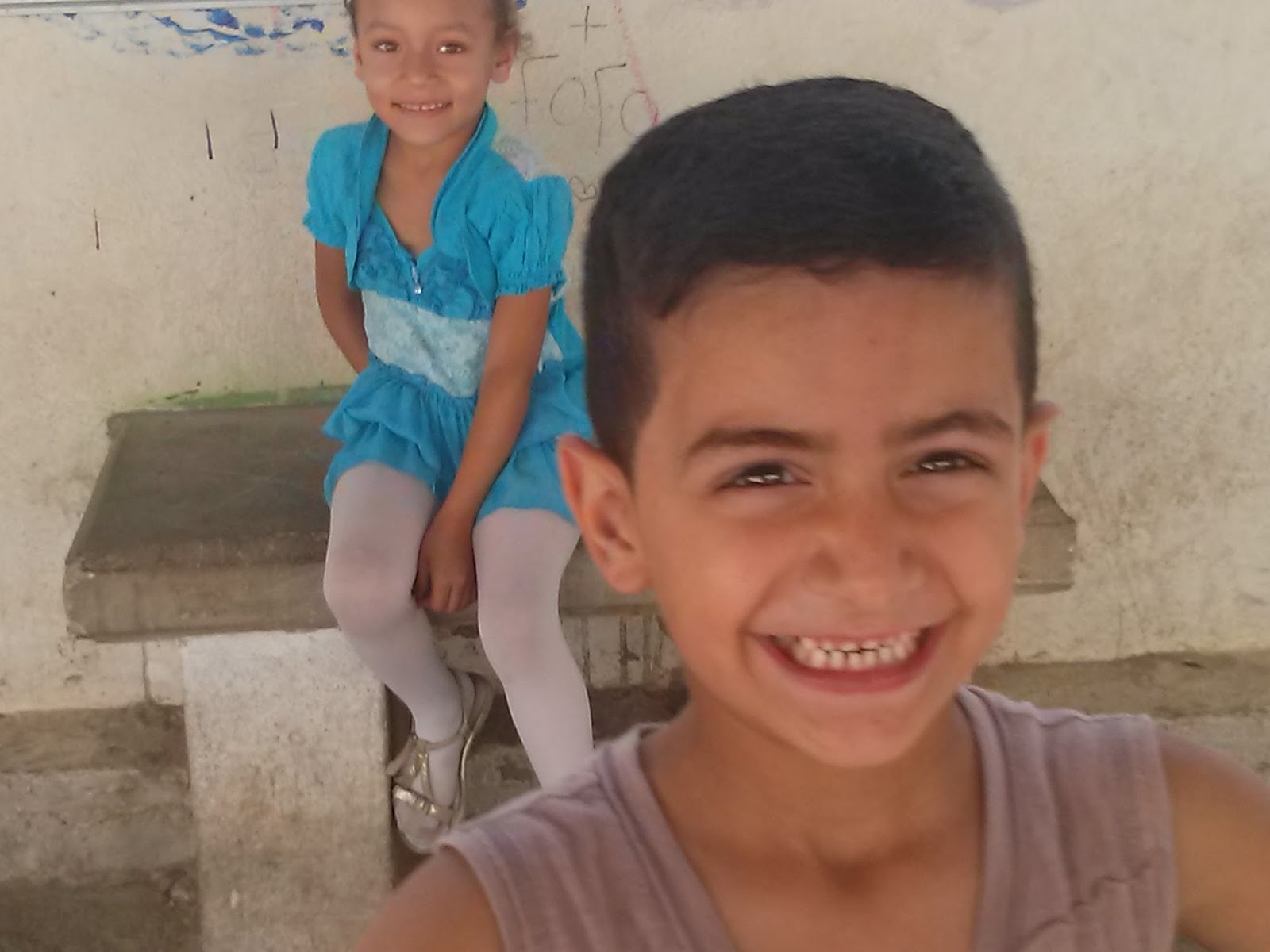
I traveled north with this photographer and toured the UNRWA school in the Beddawi refugee camp.  The camp, unlike what I had previously expected, was not a compilation of tents and other makeshift structures, but a city.  The city operates autonomously from the Lebanese government and even the Lebanese Armed Forces are not allowed to enter beyond the gates.  Instead, the city is run by the Internal Security Forces, a coalition of the various sects within the Palestinian camps, and it administers its own laws, rules, regulations, and order.  It's a fascinating and complex system that I still don't fully understand, but what I do know is that even though Palestinians in Lebanon are denied many of the basic services and civil rights extended to Lebanese citizens, the kids I found within the camps were resilient and incredible and inspiring and filled me with a renewed rush of hope.  The remainder of this entry will be written in images, rather than words, because nothing I could write would be able to capture the energy and excitement of the Beddawi camp kids. They were, to put it simply, incredible. 


Sincerely,
Inspired 

Saturday, July 13, 2013

The Predictability of Lightening

I’m having one of those moments where you go to a new place thinking everything is going to be just peachy – I have a taxi waiting for me there, I know Arabic already, I have friends in town who are going to take me out on my very first evening.  No.  Wrong.  False.  Ehhhhhhhhhhhhh.  I hear one of those buzzers in my head when you get a question wrong on Jeopardy. 

So far I’ve been overcharged about 20 bucks by my taxi driver, I arrive to my apartment and the power is shut off because the generators for the building overheated.  Forget about power in Lebanon.  State regulation has made it so that the simplicity of receiving 24-hour electricity – something we take for granted in the States and Europe and elsewhere – has now has become a luxury.  Power is as unpredictable as the wind.  An hour after the first power outage I’m out looking for phone credit.  I’ve forgotten my passport, which is apparently a prerequisite, so I go back to the apartment, then back to the credit store then back to the apartment only to realize that they’ve given me a SIM too large to fit my phone.  Til tomorrow then.  Hanshoof.  We shall see.  Inshallah.  God willing. 

Grocery shopping goes well, though I fumble through Arabic conversations in a dialect I do not know, putting me back to square one in that department.  I’m also confused as hell about the money and still not used to paying for things in quantities of 20,000 or more.  I go home and make pasta that’s little more than noodles in broth and I sit in the room with the AC and check my emails.  The power goes out again. 

It’s amazing how quickly your eyes adjust to darkness.  It’s amazing how quickly your body and sanity and lifestyle adjusts to what you are provided.  The second power outage lasts less time than the first but I am ready this time with candles, which are already burned down to their wilting brown wicks and are adorning every surface of every room.  I have learned one thing from my experiences abroad in the Middle East: nothing comes easy.  But this time I am ready.  So darkness please, come swift and strong. 

Wednesday, July 3, 2013

Berlin, du bist so wunderbar

They say that New York is the city that never sleeps but for me, whenever I hear that slogan, I will always think first of Berlin.

The sun is shining as the boy and I lug our (my) suitcases up 5 flights of steps to a beautiful, quaint Berlin apartment. The weather is warm and the city - the vast, sprawling metropolis - is silent, as if waiting for something, someone, me, us, him.

We attend a play at the Berlin Ensemble theatre. We see Peter Pan, directed by Robert Wilson with music by CocoRosie and I sit there, captivated by the sheer beauty and horror of this epic that only a city like Berlin could have produced. The sets are dark and the costumes are dark and the makeup is dark and sickening and lovely. Tinkerbell reveals a set of yellow, diseased teeth as she beams at the audience. She jerks and twitches her way across the stage in a black tutu with hints of underlying green. Wendy bounds after her with mechanical gestures and bats those big, pretty eyes which are framed by lashes as long as the legs of bulbous black spiders. She lifts her skirt up over her knees to reveal legs like splinters and canters around as she sings "to die would be a great adventure", breathing life - or rather, death - into the ballad. Peter comes next, flanked by a troupe of lost boys all in black, and the song that accompanies them rises and falls in dreamy, incomprehensible notes that are likely more akin to screams. I am spellbound by the nightmare, and yet caught in its grappling hooks as the delicate raptures of childrens' sing-song voices pull me from the comfort of my reality.

Berlin is unique in this way. Buildings warped by age and decay and a history of violence are now covered in the violent colors of street art and graffiti. "Exzess, miene liebling," one wall reads. Excess, my darling. I am reminded of the play and the way layers of glitter gleamed from the crest of Peter Pan's crown as he sang. Glitter showers the stage - its cast, the audience, the air, everything.

Excess, most certainly. But it is not an excess of wealth or of beauty or of things. It is an excess of life and spirit and motion. The city has soul. It is a tumult of paint-spattered sidewalks and derelict youth dressed in the haute couture of tattered elegance. There is always cheap food and cheaper beer and somewhere to be though the perfunctory act of needing to be somewhere never matters. So put down your talisman, because Berlin will guide you into the darkness and you will wander nowhere and find everything as you stumble through the city of excess and decay and glitter and spirit and light.

So come, meine liebling, because tonight will be a great adventure.

Sunday, January 6, 2013

Paris, til we meet again

As the semester comes to a close I sit in a small Parisian cafe with a friend I’ve made over the course of the past months speaking in a mix of French and English. We listen to the sounds of the other patrons – French, something more guttural, German, another language I can’t identify, Chinese – while the sweet aromatic tendrils of coffee seep into our clothes. I look forward to saving the smell for later. It always reminds me, this cafe, of the idealistic Paris I’d envisioned and have, in some small part, gotten to know.

This past weekend I was in Lyon, for Fete des Lumieres. A festival of lights commemorating the day that Mary saved the town from the plague. They’d all prayed for her protection and put lights in their windows, as if they could send their prayers to heaven’s gates through flame. I watched a young girl and her mother light candles from a balcony’s window, and it was easy to imagine in that old, small town, a different generation from centuries earlier doing exactly the same.


Being in Lyon was a good time to reflect on the experiences I’d had in Paris – frustrating, but good too. The people in Lyon were significantly nicer than their Parisian counterparts, and made me wonder what my time in France would have been like outside of a major metropolis, and just outside of convention… But my reflections can’t be filled with regret as I know that once again I’ve been blessed by a series of experiences so exquisite its hard to imagine I’m deserving of them. The chance to meet new people, and stay near to close friends; the opportunity to go to Tunisia and translate, fully submersing myself in an alien environment, and being challenged to a grueling extent; the chance to live with a kooky host family that I won’t ever forget; to be in Paris, and work on my French…

I’m a lucky girl.

I only have a few days left.

A semester that was just as mad as the summer that had preceded it. Its amazing how relaxed I feel now, sitting over this cup of coffee and flicking through pictures of Lyon’s ancient monoliths bathed in modern day lights. This stillness comes in spite of the fact that my life feels like constant motion – a wheel rolling in a vacuum through space. I think of how quickly I have changed and how drastic those changes have been. Throughout the course of my college experience, each year – each semester – has marked a new beginning, and a sweet end. And now is time for yet another…

Enchante, Paris, and farewell.


Monday, November 26, 2012

Thanksgiving, redefined

I had not expected much out of a Thanksgiving in Paris.  And then one of my friends I made here in Paris, invited me to hers.

The place was decadent.  Not in the overwhelming white linen table cloths, five or more pieces of silverware kind of way.  But in the way where every candlestick somehow has charm.  The ceilings were painted, like Michelangelo’s Sistine Chapel.  And the whole room was vast but somehow quiet, and warm.  It was a welcome reprieve from the bitter Parisian winds and I took my place at this long table full of family members I did not know, but who welcomed me like an old friend.

Bottles of wine made their way around the table, and deep red wine glowed cherry inside my goblet.  For my entrée, I ordered escargot followed by duck topped off by crème brulee.  Thanksgiving redefined, as one of the girls on my program said.  It was sumptuous and wonderful and I felt at home especially when the girl's mother assuaged my confidence, now shaken, of my upcoming job hunt, as I'll be graduating soon.  Pay it forward? I hope one day I can one day be in a position where I can help the next nervous senior as others have helped me.  And they have helped me.  And I am infinitely thankful for that.

So this Thanksgiving I have to be thankful for new friends, their families, for brilliant and talented Parisian cooks, like artists, and for my own family and friends waiting for me back home.  Family comes first, and being abroad has made me realize that.  I'm thankful that I'll be home soon.